Switchboard Upgrade Melbourne
A switchboard upgrade replaces an old, overloaded or unsafe fuse box with a modern board suited to your home or business electrical needs. Camma Electrical inspects the existing installation, explains what needs changing and why, completes the licensed work, tests it properly and provides the required electrical safety paperwork.
5.0★
Local rating
REC 36165
Licensed electrician
Fast
Local response
$20M
Public liability
Do I Need A Switchboard Upgrade?
You may need a switchboard upgrade if your power keeps tripping, you still have old fuses, or you are adding major electrical equipment. The right answer depends on the condition of the board, the circuits already connected and the work you want done.
A switchboard is the point where power is divided into circuits for lighting, power points, appliances and other equipment. It contains protective devices designed to disconnect a circuit when there is a fault or overload. Older boards can be difficult to work on safely, may have limited space for new circuits and may not provide the same protection expected from a modern installation.
Properties with switchboards installed more than 20 years ago are candidates for an upgrade assessment. Age alone does not decide what work is needed, but it is worth having a licensed electrician check the board, its protection and the condition of the installation before adding new electrical loads.
- Frequent circuit breaker trips or blown fuses
- Lights dimming or flickering when an appliance starts
- A burning smell, heat, buzzing or visible damage around the board
- Ceramic fuses, loose fuse wire or an old-style fuse box
- No room to add circuits for new appliances or renovations
- A board that has not kept pace with changes to the property
Old Fuses Are A Reason To Get It Checked
Old ceramic fuses are not automatically proof that every part of your installation must be replaced, but they are a good reason to arrange a licensed inspection. Replacing fuse wire or continually resetting a tripped circuit does not identify why the circuit is operating that way. A licensed electrician can check the board, circuits and protective devices before recommending the appropriate scope of work.
Tripping Power Is A Warning, Not Just An Annoyance
A circuit breaker or safety switch that trips is responding to a problem somewhere on that circuit. It might be an overloaded circuit, a faulty appliance, damaged wiring or moisture affecting an outlet. Do not keep forcing it back on. Leave the circuit off where practical and have a licensed electrician investigate the cause.
What Does A Modern Switchboard Do?
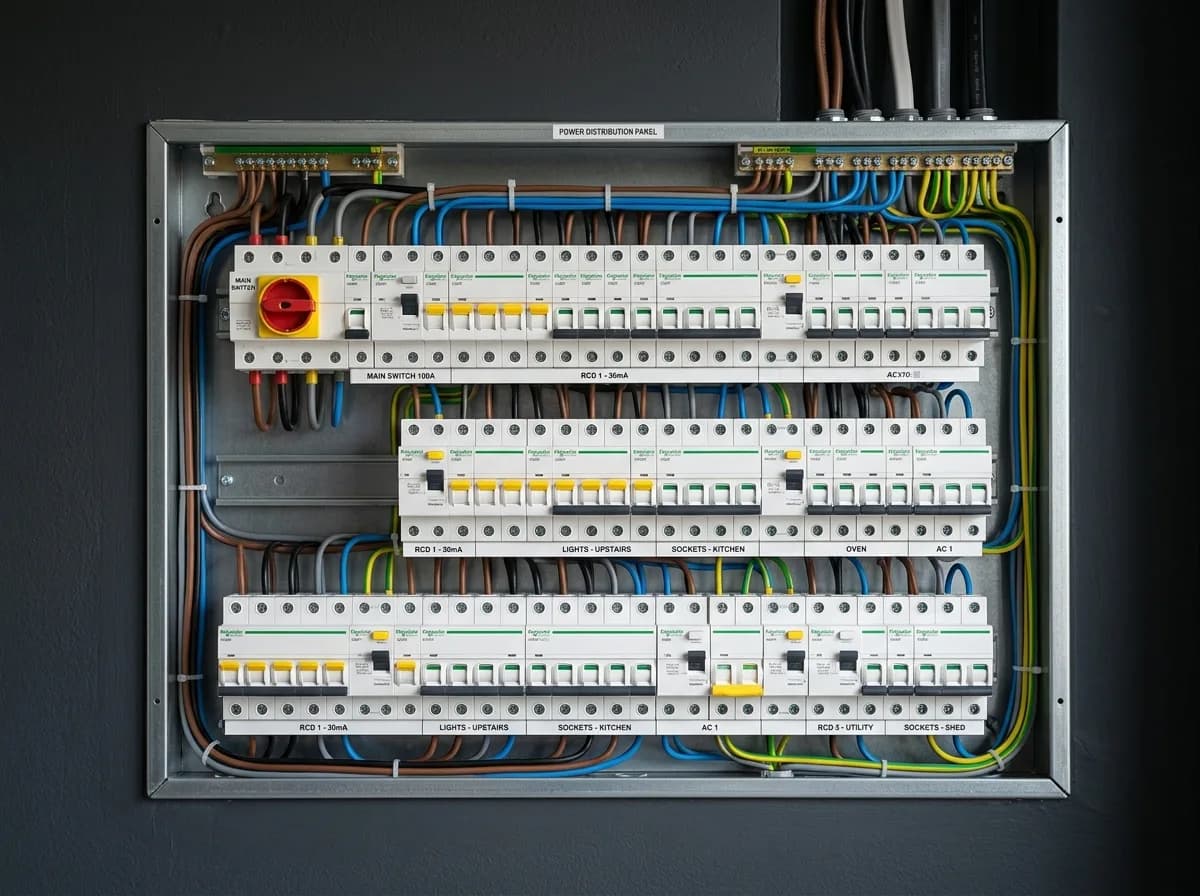
A modern switchboard gives each circuit suitable protection and a clear place for safe isolation and testing. It makes it easier to identify which circuit supplies a particular part of the property and to add properly planned electrical work later.
The important parts are not just the visible switches on the front. A good upgrade considers the enclosure, circuit protection, safety switches, earthing, cable connections, labelling, available space and the condition of the existing supply. The electrician needs to assess the whole installation that connects to the board, not simply swap a box on the wall.
Circuit Breakers And Safety Switches Are Different
A circuit breaker protects a circuit from overcurrent, such as a fault or too much load. A safety switch, also called an RCD, is designed to disconnect power when it detects current leaking from the circuit. Both have a role, and one does not replace the other. Your electrician will explain what protection is suitable for the circuits involved.
Clear Labels Matter During A Fault
Accurate labels help you safely identify circuits when there is a problem, maintenance is needed or a renovation is underway. Vague labels such as power or lights are less useful than labels that identify the relevant area or equipment. Labelling is checked as part of completing a neat, usable board.
When Renovations And New Appliances Need A Switchboard Check
Renovations and larger appliances often reveal that an older switchboard has run out of safe capacity or space. Before new electrical work is added, the existing board should be assessed so the new circuit can be installed and protected correctly.
An induction cooktop, oven, air conditioner, heat pump, electric vehicle charger, pool equipment, workshop machinery or a home extension can change the demand placed on an installation. That does not mean every new appliance requires a full switchboard replacement. It does mean the electrician needs to calculate and inspect rather than assume the existing board is adequate.
- Kitchen renovations with new cooking appliances
- Electric vehicle charger installation
- Ducted heating or cooling upgrades
- Home extensions and garage conversions
- Pool or spa equipment
- Office fit-outs and additional workstations
A Practical Melbourne Home Example
Take a family in Mount Waverley replacing a gas cooktop with induction and planning an electric vehicle charger in the garage. The electrician first inspects the existing fuse board, checks the incoming supply and looks at the circuits already serving the kitchen, heating and general power. If the board has no safe room for the required circuits or its protection needs updating, the upgrade is planned first. The new cooktop and charger circuits are then installed, tested and labelled as part of a properly coordinated job.
Do Not Add Loads By Guesswork
It is tempting to focus only on whether there is an empty space in the board. Empty space alone does not tell you whether the installation can support a new circuit. Cable sizes, protection, supply capacity, existing demand and the equipment manufacturer’s requirements all need to be considered by a licensed electrician.
What Happens During A Switchboard Upgrade?
A switchboard upgrade starts with an inspection and a clear discussion of what the electrician finds. The work is then planned around the existing installation, the circuits required now and any sensible allowance for future electrical work.
Power usually needs to be isolated while the board is being replaced or substantially altered. The electrician will advise you beforehand about the expected interruption and any preparation that will help, such as access to the switchboard and making sure sensitive equipment is shut down safely.
AS/NZS 3000:2018 is the wiring standard that applies to electrical installation work in Victoria. It sets the requirements a licensed electrician works to when assessing and altering the installation connected to your switchboard.
Inspection Before Replacement
The initial inspection looks for issues that affect the job, including the type and condition of the existing board, access, cable entry, earthing, circuit condition and the number of circuits needed. If the electrician finds an issue beyond the board itself, they should explain it plainly and discuss the options before proceeding with additional work.
Testing Is Part Of The Job
Once the installation work is complete, the circuits and protective devices must be tested. Testing confirms that the altered installation is operating as intended and helps identify faults that should not be left hidden behind a new switchboard cover. You should also be shown the board and have the key controls explained.
Can I Keep My Existing Wiring When Upgrading The Board?
Sometimes existing wiring can remain when a switchboard is upgraded, but it must be assessed circuit by circuit. A new board cannot make damaged, unsuitable or incorrectly connected wiring safe simply by being new.
The scope may range from replacing the board and protection devices through to repairing particular circuits, upgrading the main earthing arrangement or installing new circuits for planned appliances. The right approach is based on inspection findings, not a one-size-fits-all package.
The Board And The Wiring Are Connected
Your switchboard is only one part of the electrical installation. If a circuit has insulation damage, poor connections, an unsuitable cable or another fault, that issue needs its own solution. A proper inspection prevents the misleading outcome of a tidy new board connected to an unresolved problem elsewhere in the property.
Existing Circuits Need Proper Identification
Older homes can have circuits that are poorly labelled, altered over time or serving more areas than expected. Identifying what each circuit does helps the electrician plan the upgrade safely. It also gives you a clearer record of the property’s electrical layout after the work is finished.
Switchboard Upgrades For Melbourne Businesses
A business switchboard upgrade needs to suit the actual equipment and daily operation of the premises. Shops, offices, workshops and hospitality sites can have electrical demands that change as equipment, staff numbers or tenancy layouts change.
A commercial job should be planned around safe shutdowns, essential equipment, access requirements and the circuits the business relies on. If there is a landlord, body corporate, building manager or other party involved, it helps to clarify responsibilities and access before work is booked.
- Retail lighting and point-of-sale circuits
- Office power, server and communications areas
- Kitchen and food-service equipment
- Workshop tools and machinery
- Air conditioning and ventilation
- New tenancy or fit-out circuits
Plan Around The Business Day
A switchboard cannot be upgraded properly without some interruption to power. The best time and sequence depend on the site. Camma Electrical can discuss access, the equipment that needs to be shut down and the practical steps to reduce disruption while keeping the electrical work safe.
Leave Room For Future Changes Where It Makes Sense
Business needs can change quickly, especially after a fit-out or equipment purchase. Where practical, planning for clearly arranged circuits and appropriate room for future work can avoid making the next electrical change harder than it needs to be. What is appropriate will depend on the particular board and supply.
What Electrical Safety Paperwork Should I Receive?
For prescribed electrical work, you should receive a Certificate of Electrical Safety from the registered electrical contractor. Keep it with your property records, particularly if you are selling, leasing, renovating or need to show what electrical work has been completed.
Energy Safe Victoria describes a Certificate of Electrical Safety as a legal document issued by a registered electrical contractor or licensed electrician to record the details of the electrical work they have performed. It is an important document, but it does not remove the need to call an electrician if you later notice a fault, damage or repeated tripping.
Why The Certificate Matters
Energy Safe Victoria requires a Certificate of Electrical Safety to be issued for prescribed electrical work. The certificate identifies the work and provides a record that the work was completed through the proper electrical safety process. Ask if anything about the document or the completed work is unclear.
Inspections Can Follow Electrical Work
Work completed under a Certificate of Electrical Safety may be audited by Energy Safe to verify that the electrical installation work is safe and compliant. That is one reason licensed work, proper testing and accurate records matter. An inspection is not something a homeowner needs to arrange as part of every switchboard job.
What Not To Do With An Old Fuse Box Or Faulty Board
Do not remove covers, replace fuse wire, touch exposed parts or attempt electrical repairs yourself. Electrical work must be left to a licensed electrician, particularly at a switchboard where the risk of shock, fire and damage is serious.
If you notice burning, crackling, heat, smoke, visible damage or a strong electrical smell, keep people away from the area and do not try to investigate inside the board. If it is safe to do so without touching damaged equipment, turn off power at the main switch. Then get in touch with a licensed electrician for advice.
Repeated Resets Can Hide The Real Fault
Resetting a breaker once after a clearly identified temporary overload may restore power, but repeated trips need investigation. Do not keep resetting a device that will not stay on. Unplugging appliances from the affected circuit may help identify whether the issue is appliance-related, but electrical testing and repairs must be done by a licensed electrician.
Keep Access To The Board Clear
Avoid storing boxes, tools or garden equipment against the switchboard. Clear access makes it easier to isolate power in an emergency and allows an electrician to inspect and work safely. If the board is outdoors, tell the electrician about water entry, corrosion, pests or physical damage you have noticed.
How To Arrange A Switchboard Upgrade In Melbourne
Getting a switchboard upgrade organised starts with booking a licensed electrician to inspect the property and discuss what you need. Camma Electrical is a licensed electrical contractor, REC 36165, and will explain the condition of the board, the recommended work and any issues found in plain language.
When you get in touch, let us know what is happening: whether the power is tripping, what type of board you have if you know, and whether you are planning a renovation or new appliance. At the appointment, the electrician will inspect the installation, talk through the findings and provide a clear scope before work is arranged. After the job, you will be shown the completed board and receive the relevant electrical safety documentation.
Useful Details To Mention When You Call
Mention any burning smell, buzzing, damaged equipment, frequent tripping or recent changes to appliances. Photos of the outside of the switchboard can also help start the conversation, but do not remove the cover or take photos of live internal parts. If the situation appears dangerous, make that clear when you get in touch.
A Straightforward Local Electrical Service
Camma Electrical works with homeowners and local businesses across Melbourne’s south-east. The aim is not to sell unnecessary work. It is to identify what the installation needs, complete the work safely and leave you with a switchboard that is easier to understand and use.
CLIENT REVIEWS
WHAT CLIENTS SAY
20 reviews on Google →
Common Questions
How do I know if my switchboard is too old?
Old fuses, recurring tripping, lack of space for circuits, heat, damage or a board that does not suit planned electrical work are all reasons to book an inspection. Age by itself is not enough to diagnose the condition of an installation.
Will a switchboard upgrade turn my power off?
Usually, power needs to be isolated while the board is replaced or substantially changed. Your electrician will discuss the expected interruption before work begins so you can prepare appliances and equipment.
Do I need a switchboard upgrade for an EV charger?
Not always. A licensed electrician needs to inspect the existing supply, switchboard, available capacity and required new circuit before advising whether an upgrade is needed.
Can I replace old fuses with circuit breakers myself?
No. Switchboard work must be carried out by a licensed electrician. It involves live electrical infrastructure and requires correct installation, testing and electrical safety documentation.
Will I receive a Certificate of Electrical Safety?
For prescribed electrical work, the registered electrical contractor issues a Certificate of Electrical Safety. Keep the document with your property records.
Sources
- Energy Safe Victoria — A Certificate of Electrical Safety is a legal document issued by a registered electrical contractor or licensed electrician to record the details of the electrical work they have performed.
- RoshAA Co — AS/NZS 3000:2018 is the wiring standard that applies to electrical installation work in Victoria.
- KM Electric — Properties with switchboards installed more than 20 years ago are candidates for an upgrade assessment.
Book a licensed electrician to inspect your switchboard and explain the right next step.
Get a free, no-obligation quote from your local licensed electrician.