EV Charger Installation Melbourne
A home EV charger should be installed by a licensed electrician on a dedicated circuit that suits your vehicle, garage and existing electrical supply. Camma Electrical assesses the switchboard, cable route and charger location before carrying out compliant installation work and issuing the required electrical safety paperwork in Melbourne.
5.0★
Local rating
REC 36165
Licensed electrician
Fast
Local response
$20M
Public liability
Do I Need An Electrician To Install An EV Charger?
Yes. A fixed EV charger needs a licensed electrician because it is a high-load electrical appliance connected to your home’s wiring and switchboard. The job is not simply mounting a unit on the wall; it includes checking the electrical supply, installing the correct protection and testing the completed circuit.
Camma Electrical is a licensed Victorian electrical contractor, REC 36165. We can install a charger you have already chosen or help you work through the practical requirements before you buy one. The right approach depends on where you park, how far the charger is from the switchboard and what capacity your home has available.
Why A Dedicated Circuit Matters
An EV charger should have its own circuit rather than sharing power with household lights, power points or other large appliances. A dedicated circuit gives the charger the protection and cable capacity it needs and makes faults easier to isolate if a problem occurs.
Electrical Safety Paperwork In Victoria
In Victoria, a Registered Electrical Contractor must issue a Certificate of Electrical Safety after completing prescribed electrical work. Keep this certificate with your home records, along with the charger instructions and any warranty documents.
What Happens During An EV Charger Installation?
An EV charger installation starts with an on-site assessment, followed by the electrical work, testing and certification. A proper inspection before installation avoids finding out halfway through the job that the cable route, switchboard or charger position needs to change.
We look at the job as a whole, not just the wall where the charger will sit. That means considering how you use the driveway or garage, where the charging cable will run and whether the setup will still be practical when the car is parked.
Where prescribed electrical installation work is involved, a Certificate of Electrical Safety must be issued and the work inspected by a licensed electrical inspector before connection to electricity supply. The cable size and protective devices are selected as part of the electrical assessment, rather than guessed from the charger location alone.
Checking Your Switchboard
The electrician checks the condition and available space in the switchboard, as well as the home’s existing electrical demand. Some homes are ready for a new circuit. Others may need switchboard work or a different charging arrangement before a charger can be connected safely.
Planning The Cable Route
The cable route affects both the scope of work and the finished look. A short, accessible route through a garage is usually more straightforward than a route through a roof space, under paving, across several levels or out to a detached carport. We explain the practical options before work begins.
Where Should An EV Charger Be Installed At Home?
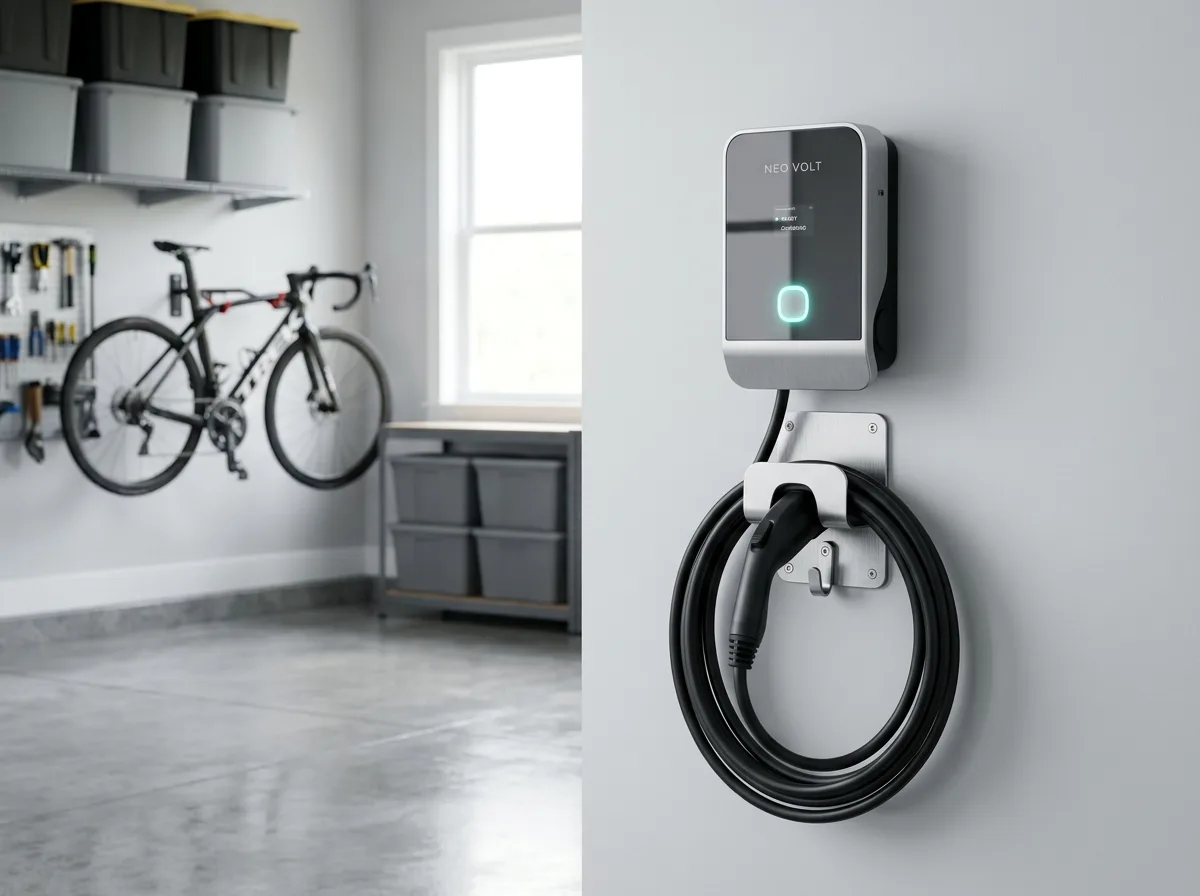
The best EV charger location is usually close to where the vehicle parks, protected from knocks and positioned so the charging lead reaches without being stretched across a walking path. The final location also needs to allow for a safe cable route back to the switchboard.
A garage wall is a common choice, but it is not the only option. Carports, side driveways and exterior walls can also be suitable when the equipment and installation method are selected for that setting.
Garage And Carport Charger Locations
In a garage, we check vehicle clearance, door travel, shelving and where the lead will sit when it is not in use. In a carport, we consider weather exposure, mounting strength and protection from accidental impact. A charger should be easy to use without becoming an obstacle.
Avoiding Awkward Charging Leads
It is worth planning for ordinary daily use. If the lead has to cross the driveway, hang across a doorway or reach around the front of a parked car every night, the charger may be in the wrong spot. A small change in mounting location can make charging much easier over the long term.
Single-Phase Or Three-Phase EV Charger: What Is The Difference?
The right charger depends on the electrical supply at your property, the charger model and the charging capability of your vehicle. Single-phase and three-phase describe different types of electrical supply; neither is automatically the best choice for every Melbourne home.
An assessment is important because installing a charger with a higher capability does not necessarily mean the vehicle will charge at that level. The vehicle, charger, supply and household load need to be considered together.
Single-Phase Charging At Home
Many homes have single-phase power, and a suitable charger can be installed where the existing supply and switchboard allow. This can be a practical arrangement for households that charge overnight or do not need the vehicle ready again after a short stop at home.
When Three-Phase May Be Relevant
Three-phase supply may be relevant for some larger homes, newer properties or owners whose vehicle and charger are compatible with it. We check what is actually present at the property before recommending an installation path. If further supply work is needed, you should know that before committing to a charger.
Will My Switchboard Need An Upgrade For An EV Charger?
Not every EV charger installation needs a switchboard upgrade, but the switchboard must be assessed before a charger is connected. Its condition, spare capacity, protective devices and the amount of power already used in the home all matter.
Older switchboards can have limited room for additional protective devices or components that are no longer suitable for modern electrical loads. Where work is needed, we explain what needs attention and why rather than treating an upgrade as an automatic extra.
Signs The Switchboard Needs A Closer Look
A crowded switchboard, older ceramic fuses, frequent tripping or visible deterioration are reasons to inspect the board carefully. They do not by themselves tell you what work will be required, but they are useful warning signs that the charger installation needs proper planning.
Managing Household Electrical Demand
Your EV may charge at the same time as cooking, heating, cooling, hot water or other major appliances are running. The electrician considers this likely overlap when designing the circuit. The aim is a charging setup that works with the home rather than placing unnecessary strain on the supply.
What A Real EV Charger Installation Looks Like
A typical EV charger job is planned around the property, not a one-size-fits-all package. Here is an example of how an installation can unfold when a homeowner wants to charge an EV in a garage after work.
The details will differ from house to house, but the sequence shows why an on-site assessment is useful before selecting the final charger location and scope of electrical work.
Example: Sarah’s Glen Waverley Garage
Sarah parks her EV nose-first in a single garage and wants the charger on the side wall beside the driver’s door. The switchboard is at the other end of the house, with a roof space between it and the garage. During the inspection, we check the switchboard, measure the cable route and confirm that the proposed wall position will not interfere with shelves or the garage door.
We then agree on a charger position that keeps the lead off the floor when stored. The electrician installs the dedicated circuit, mounts and connects the charger, tests the work and provides the electrical safety certificate. Sarah receives an explanation of the isolating point and what to do if the charger ever trips its protection.
Why The First Location Is Not Always The Best One
In this example, the wall beside the car was useful, but the exact height and side-to-side position still needed checking. Moving the unit slightly can keep it clear of a vehicle door, a future storage cabinet or a narrow walkway. Those details are easier to resolve before cabling and mounting work starts.
Can I Install An EV Charger In An Apartment Or Rental Property?
An EV charger can be more involved in an apartment, townhouse complex or rental property because the parking space and electrical infrastructure may not be controlled by one owner. Start by checking approval requirements before arranging electrical work.
The electrical installation still needs to be designed and carried out correctly, but written permission and access arrangements can be just as important as the physical work. It is better to resolve these matters early than to buy equipment that cannot yet be installed.
Apartments And Owners Corporations
For an apartment or shared car park, the owners corporation may need to approve equipment on common property, cable routes or changes near shared electrical services. Ask what drawings, specifications or contractor details are needed. We can discuss the proposed electrical scope so you have clear information for that conversation.
Rental Homes
Renters should obtain the owner or property manager’s approval before arranging a fixed charger. The charger location, equipment ownership and what happens if the tenancy ends are practical matters worth setting out in writing before installation.
How To Prepare For An EV Charger Quote
The most useful EV charger quote starts with clear information about your vehicle, charger plans and parking location. Photos can help with an initial conversation, but an on-site assessment may still be needed where the cable route or switchboard condition is unclear.
You do not need to know the technical answer before getting in touch. Tell us how you park, where you would prefer the charger and whether you have already bought a unit. We will ask the relevant questions and explain the options in plain language.
Melbourne electrician hourly rates range from $84 to $160 plus call-out fees as of 2026. The final cost of an EV charger installation still depends on the particular property, including the cable route, access, switchboard work and the equipment required.
Useful Details To Have Ready
Let us know the vehicle model, whether you already own a charger and whether your home has solar or other significant electrical loads. Photos of the switchboard, parking area and proposed mounting wall can also help identify likely site considerations before a visit.
- The charger make and model, if you have selected one
- Where the vehicle normally parks
- Photos of the switchboard and proposed charger location
- Whether the cable may need to cross a garage, roof space, driveway or detached building
Choosing A Charger Before The Site Is Checked
It is fine to have a preferred charger in mind, but avoid assuming every model will suit every property without an electrical assessment. The installation needs to suit the charger, and the charger should also suit your vehicle, available supply and everyday parking arrangement.
What Happens When You Contact Us About EV Charger Installation?
When you get in touch, we will discuss your home, vehicle and preferred charging location, then arrange a suitable time for a licensed electrician to assess the job. You will get practical advice about the electrical work required before moving ahead.
Camma Electrical handles EV charger installations across Melbourne’s south-east with a straightforward approach. We inspect the site, explain the proposed work clearly, complete the installation safely and provide the required electrical safety documentation when the job is finished.
A Clear On-Site Assessment
The electrician checks the switchboard, access, cable route and charger position. If there are different workable options, we explain the differences in practical terms, including how each option will affect the finished installation.
Installation, Testing And Handover
Once the work is agreed, the charger circuit and equipment are installed, tested and checked. We show you the completed setup, answer reasonable questions about the installation and provide the relevant certificate for the electrical work.
CLIENT REVIEWS
WHAT CLIENTS SAY
20 reviews on Google →
Common Questions
Can you install an EV charger I have already bought?
Yes, provided the charger is suitable for the property and installation. We assess the unit, electrical supply, switchboard and proposed location before confirming the work required.
How long does EV charger installation take?
It depends on the switchboard, cable route, access and whether any additional electrical work is needed. A garage close to a suitable switchboard is different from a detached carport or an apartment car space.
Do I need to upgrade my switchboard for an EV charger?
Not always. The switchboard needs to be inspected first to confirm it can safely accommodate the new dedicated circuit and protection.
Can an EV charger be installed outside?
It can be possible where the charger and installation are appropriate for the location. The mounting position, weather exposure, cable route and protection from damage all need to be considered.
Do I receive a certificate after the installation?
Yes. In Victoria, prescribed electrical work requires a Certificate of Electrical Safety from the Registered Electrical Contractor.
Sources
- Energy Safe Victoria — In Victoria, a Registered Electrical Contractor must issue a Certificate of Electrical Safety after completing prescribed electrical work.
- Energy Safe Victoria — Where prescribed electrical installation work is involved, a Certificate of Electrical Safety must be issued and the work inspected by a licensed electrical inspector before connection to electricity supply.
- What's The Damage — Melbourne electrician hourly rates range from $84 to $160 plus call-out fees as of 2026.
Planning a home EV charger in Melbourne? Get in touch to arrange a practical site assessment with a licensed electrician.
Get a free, no-obligation quote from your local licensed electrician.