Outdoor Garden Lighting Installation Melbourne
Outdoor garden lighting makes paths, entries, decks and planting easier to use after dark without turning the yard into a floodlit space. Camma Electrical plans and installs practical outdoor lighting for Melbourne homes and businesses, with safe wiring, suitable fittings and light aimed where it is actually needed.
5.0★
Local rating
REC 36165
Licensed electrician
Fast
Local response
$20M
Public liability
What Does Outdoor Garden Lighting Installation Include?
Outdoor garden lighting installation means fitting lights and safely connecting them to the property’s electrical system so the garden, paths and outdoor areas can be used after dark. A good result is not simply adding more fittings. It is deciding what needs light, where the cables can run and how to avoid glare.
The right layout depends on how you use the space. Some homes need a clear route from the driveway to the front door. Others need gentle light around a deck, steps, pool fence, side passage or garden beds. For a business, the priority may be a safer entrance, signage or access route.
- Path and step lighting for clear footing
- Entry and front garden lighting
- Deck, patio and pergola lighting
- Garden-bed and feature-tree lighting
- Side access and bin-area lighting
- Lighting controls such as switches, sensors and timers
What garden lighting is meant to do
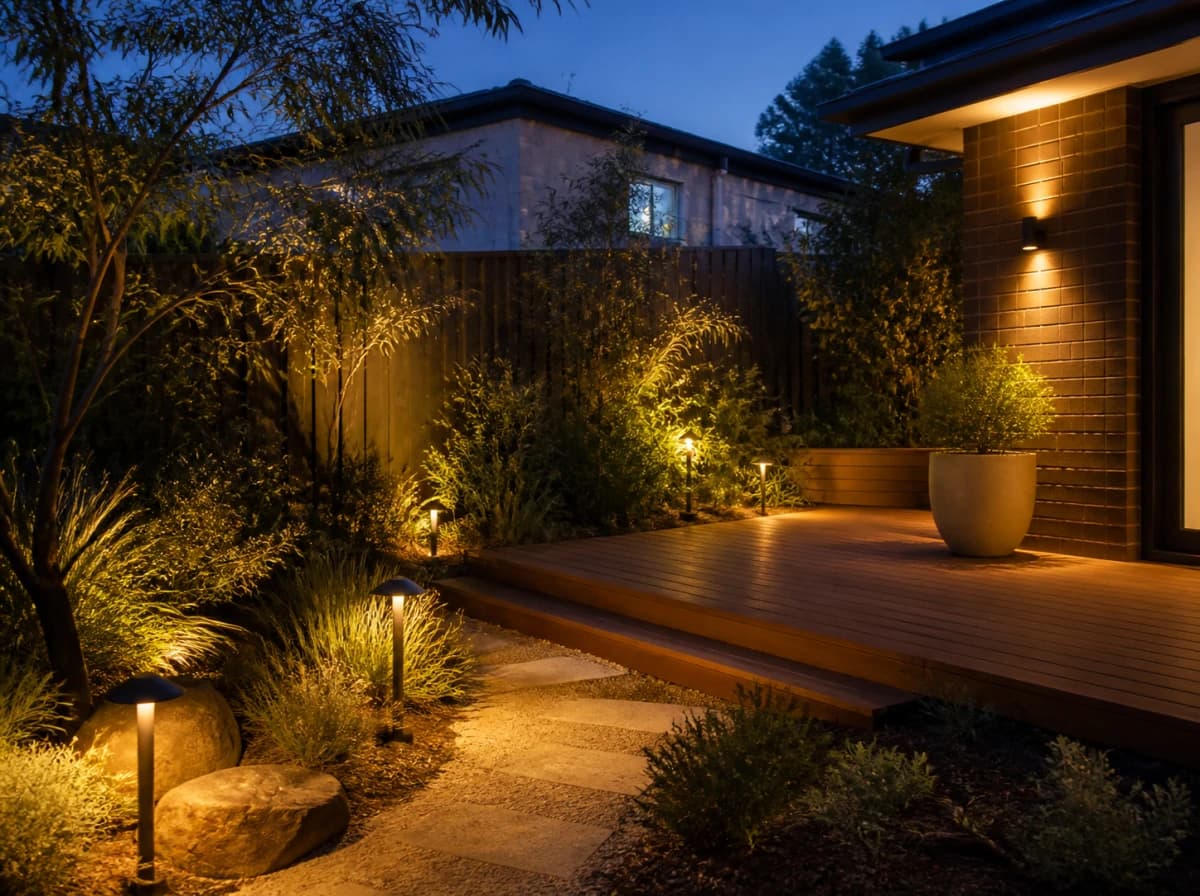
Outdoor lighting should make a route, level change or useful area easier to see. It can also pick out a tree, wall or planted area, but the practical job comes first. We look at where people walk, unlock doors, carry shopping and spend time outside.
Why the fitting location matters
A bright fitting in the wrong place can make a garden less comfortable because it shines into someone’s eyes or through a window. Position, direction and shielding matter as much as the fitting itself. The aim is useful light on the ground or feature, not light spilling everywhere.
Which Outdoor Lights Work Best In A Melbourne Garden?
The best outdoor lights are the ones suited to the job and to their exact location. A path light, a wall light and a deck light each throw light differently, so choosing by appearance alone can leave dark spots or unwanted glare.
Melbourne gardens also deal with rain, wind, irrigation and changing weather. We help select fittings intended for outdoor exposure and place them where they can be maintained without disturbing established plants or paving.
- Low path lights for defined walkways
- Step lights for changes in level
- Wall lights near doors and gates
- Downlights for covered outdoor areas
- Spike lights for trees and feature planting
- Bollard lights for longer paths and open garden edges
Path and step lights
Path and step lighting is about seeing the surface in front of you. The lights should show the route without creating a row of harsh points at eye level. We consider the width of the path, the direction of travel and where people naturally enter and leave the area.
Feature lights for trees and planting
Feature lighting can give depth to a garden at night when it is kept controlled. A small number of well-aimed fittings often looks better than lighting every plant. We can place lights to show texture in a trunk, foliage or garden wall while keeping the beam out of nearby windows.
How Do You Plan Garden Lighting Before Installation?
A garden lighting plan starts with a walk around the property after considering how the area is used at night. We identify the routes, doors, steps, entertaining areas and garden features worth lighting, then work out a sensible position for fittings, wiring and controls.
Planning before installation avoids a common problem: adding lights one at a time until the garden has uneven pools of light, visible cables and switches that do not suit the way the household uses the space.
- Where people walk after dark
- Doors, gates and access points
- Stairs, level changes and trip hazards
- Seating, dining and barbecue areas
- Existing power and practical cable routes
- Nearby bedrooms and neighbouring properties
Start with the essential areas
We usually begin with the front entry, driveway route, side access and any steps. These are the areas where clear, reliable light is most useful. Decorative garden lighting can then be added around the practical layout rather than competing with it.
Think about the garden in every season
Plants grow, trees fill out and outdoor furniture moves. A fitting that looks clear when installed can be hidden by a shrub later on. We consider expected growth, mowing edges, garden maintenance and drainage so fittings and cable routes remain practical over time.
How Can You Avoid Glare And Light Spilling Into Neighbours' Homes?
You can avoid most outdoor lighting complaints by aiming light down or at the surface that needs it, not outward or upward. Shielded fittings, sensible mounting positions and separate control of different areas make a garden more comfortable for your household and less intrusive for neighbours.
Over-lighting is rarely the answer to a dark garden. A lower, better-placed light can make a path easier to follow than a powerful fitting that throws deep shadows and makes your eyes adjust constantly.
- Aim fittings towards paths, steps and garden features
- Keep bright fittings away from direct sightlines
- Use shields or louvres where appropriate
- Avoid shining lights into bedroom windows
- Separate functional lighting from decorative lighting
- Check the garden from the street and neighbouring boundaries
Light trespass and glare in plain language
Light trespass is unwanted light reaching another property or room. Glare is light that is uncomfortable or makes it harder to see properly. Both can happen when a fitting is too bright, mounted too high, poorly aimed or left exposed to direct view.
A practical example for a rear deck
Take a family in Mount Waverley with a deck, three steps down to lawn and a bedroom window beside the back door. We would first light the steps with low, downward-facing fittings, then add a modest light by the door for keys and access. If they want the garden visible from the deck, a separately switched feature light can be aimed into a tree rather than across the lawn and into the bedroom window.
Should Garden Lights Be On A Sensor, Timer Or Switch?
The best control depends on when and why you use each light. A sensor can suit a side passage or entry, while a switch is often better for an entertaining area where you want the light to stay on while people are outside.
Separating the garden into zones gives you more control. It means a path can be lit without turning on every feature light, and deck lighting can be used without lighting the entire backyard.
- Wall switches for areas used regularly
- Sensors for entrances and side access
- Timers for predictable evening lighting
- Separate zones for paths, decks and feature lights
- Dimming where compatible fittings and controls are selected
Sensor lighting for access areas
Sensor-controlled lighting can be useful at a front entry, side gate or garage path because it comes on when someone approaches. The sensor needs careful placement. It should detect the approach you want without being set off unnecessarily by passing movement or activity in the wrong area.
Separate controls for entertaining spaces
Deck and patio lighting usually needs a different feel from security or access lighting. Keeping these lights on their own control lets you use a softer level for dinner outside, while still having brighter light available near doors, steps and gates when needed.
What Happens To Cables And Existing Garden Areas?
Outdoor lighting cables need a planned route that keeps the installation safe, tidy and workable around the garden. We inspect the site before starting so we can identify existing structures, paved areas, garden beds and the most sensible path back to the electrical supply.
A careful cable route matters because outdoor work can involve digging, paving, retaining edges, irrigation and established landscaping. The goal is to minimise disruption while still completing the electrical work properly.
- Cable routes considered before digging begins
- Care around established plants and garden edges
- Coordination with paving, decking and landscaping work
- Fittings positioned for future access and replacement
- Switches and controls located where they are useful
Installing lights in an established garden
Established gardens need a measured approach. We look for routes through accessible beds or alongside hardscape where possible, rather than treating every lawn or planted area as open ground. If there are irrigation lines, landscape plans or known underground services, tell us before work starts.
Planning lighting with a new landscape project
Garden lighting is easier to coordinate before new paving, decking, retaining walls or planting goes in. If you are working with a landscaper or builder, arranging the electrical side early can prevent visible surface cables or the need to lift completed work later.
Do You Need A Permit For Garden Lighting In Melbourne?
Most garden lighting questions are electrical and site-planning questions, but planning controls can matter in particular locations or properties. It is worth checking early if your home has a heritage overlay, is part of a larger development, or the work is tied to broader building or landscape changes.
The City of Melbourne says its planning scheme determines whether a planning permit is needed for a proposed use or development. Its rules apply within that municipality, so homeowners elsewhere in Melbourne should check the planning controls relevant to their own property and council.
- Check overlays before larger outdoor works
- Consider permits as part of broader renovation planning
- Keep electrical work separate from planning assumptions
- Ask before work starts if the property has special controls
When planning controls may need checking
For residential garden lighting in City of Melbourne, a Heritage Overlay or other specific control can change whether a planning permit is needed. This does not mean every light fitting needs a permit. It means the property’s planning controls should be checked where there is a reason to think they apply.
What a permit application can require
City of Melbourne's permit application guidance says an application needs a signed form, a current Certificate of Title and the applicable fee. If a permit question comes up, confirm the requirements directly with the relevant council because the exact project and property controls matter.
Why Use A Licensed Electrician For Outdoor Lighting?
Outdoor lighting is electrical work in an exposed environment, so it should be installed by a licensed electrician. Water, damaged fittings, poor connections and unsuitable cable routes can create problems that are not always visible from the surface.
Camma Electrical is run by a working electrician and holds electrical contractor licence REC 36165. We can assess the condition of the existing supply, plan the new lighting work and complete the installation as part of a safe, considered job.
The IP rating describes how well a fitting is protected from solid objects and water, so the right rating depends on whether the light is under cover, exposed to rain or near irrigation.
Energy Safe Victoria says the Registered Electrical Contractor or Licensed Electrical Worker completes the certificate of electrical safety and is required to provide you with a copy within 30 days.
- Assessment of the existing electrical supply
- Safe connection of new outdoor lighting
- Appropriate consideration of wet and exposed locations
- Testing after installation
- Advice on practical controls and fitting placement
Why outdoor work needs proper assessment
A garden light is not just a fitting pushed into a garden bed. The connection, cable route, outdoor conditions and protection at the switchboard all need to be considered together. A licensed electrician can identify issues with the existing installation before extending it.
When replacing old garden lights
Old outdoor lights may have faded fittings, cracked covers, corroded connections or cables disturbed by years of gardening work. Replacing fittings is a good chance to review whether the layout still suits the garden and whether a different control arrangement would work better.
What Should You Tell Your Electrician Before Garden Lighting Is Installed?
The most useful information is how you want to use the garden after dark and which areas currently frustrate you. Photos of the area, a simple sketch and a list of priorities can help turn a general idea into a layout that suits the property.
You do not need to know the technical answer before getting in touch. It is enough to explain whether you want safer access, a better deck area, a more welcoming front garden or lighting that shows off particular trees and planting.
- Which paths, doors or steps need better visibility
- Where you sit or entertain outside
- Whether lights should be subtle or more noticeable
- Existing lights that do not work well
- Any planned landscaping, paving or deck work
- Known irrigation, underground services or recent excavation
Questions to consider before the visit
Think about whether the lights should come on only when needed or whether you want a garden visible each evening. Consider where light may affect bedrooms, neighbours or drivers arriving in the driveway. These details help us recommend a layout with a clear purpose.
If you already have fittings in mind
You are welcome to show us fittings you have seen or bought. We can discuss whether they suit the intended location, the look you are after and the broader layout. It is often better to check this before buying a full set of lights that may not suit the site.
What Happens When You Contact Us About Garden Lighting?
When you get in touch about outdoor garden lighting, we will arrange a suitable time for a licensed electrician to understand the job and inspect the relevant areas. You can explain what you want the lighting to achieve, show us the garden and point out any existing issues or planned works.
We will talk through practical options for the layout, fittings, controls and cable routes before the work proceeds. You will have a clear chance to ask questions about the proposed installation, especially where access, gardens, paving or existing electrical equipment affect the job.
- Book a site visit for the relevant outdoor areas
- Show the paths, garden beds, deck or entry you want lit
- Discuss the lighting purpose and preferred controls
- Review practical installation options before work begins
- Have the work completed by a licensed electrician
A site visit focused on your property
Every garden has different access, planting, surfaces and existing electrical conditions. Seeing the property lets us assess the practical details that cannot be judged from a general description, including where light is needed and how the installation can fit around the space.
Clear advice before the work starts
We keep the conversation straightforward. If an idea is likely to cause glare, leave a path dim or make future garden work difficult, we will explain why and discuss a better option. The aim is outdoor lighting that feels useful and settled into the property.
CLIENT REVIEWS
WHAT CLIENTS SAY
20 reviews on Google →
Common Questions
Can outdoor garden lights be installed in existing garden beds?
Yes, garden lighting can be planned for established beds, but the cable route and fitting positions need to account for plants, irrigation, edging and future maintenance. A site inspection helps identify the least disruptive approach.
Can you install lights for a deck and the garden at the same time?
Yes. Deck, step, path and garden feature lights can be planned as one layout, with separate controls where that makes sense. This helps the lighting work together rather than looking like separate additions.
Will garden lighting shine into my neighbour's property?
It should not need to. Fitting choice, beam direction, shielding and placement can reduce unwanted light spill. We consider neighbouring windows and boundaries as part of the lighting layout.
Can I keep my existing outdoor lights and add new ones?
Often, yes. We can inspect the existing lights and discuss whether they are worth retaining, repositioning or replacing as part of the new layout.
Do I need to supply the light fittings?
You can discuss your preferences with us, including fittings you have already found. We can help assess whether they suit the location and the type of light you want before installation.
Sources
- City of Melbourne — The City of Melbourne says its planning scheme determines whether a planning permit is needed for a proposed use or development.
- City of Melbourne — City of Melbourne's permit application guidance says an application needs a signed form, a current Certificate of Title and the applicable fee.
- Energy Safe Victoria — Energy Safe Victoria says the Registered Electrical Contractor or Licensed Electrical Worker completes the certificate of electrical safety and is required to provide you with a copy within 30 days.
Talk with Camma Electrical about practical, well-planned outdoor garden lighting for your Melbourne property.
Get a free, no-obligation quote from your local licensed electrician.