Circuit Breaker Upgrade Melbourne
A circuit breaker upgrade replaces outdated fuse protection or an overloaded switchboard with properly selected modern circuit breakers and safety switches. Camma Electrical assesses the condition of your Melbourne property’s board, circuits and power needs, explains what needs attention, and completes electrical work through licensed electrician REC 36165.
5.0★
Local rating
REC 36165
Licensed electrician
Fast
Local response
$20M
Public liability
Do I Need A Circuit Breaker Upgrade?
You may need a circuit breaker upgrade if your switchboard is old, short on space, regularly trips, has old-style fuses, or cannot safely support planned electrical work. The right answer comes from inspecting the board and the circuits it protects, not simply replacing parts because of their age.
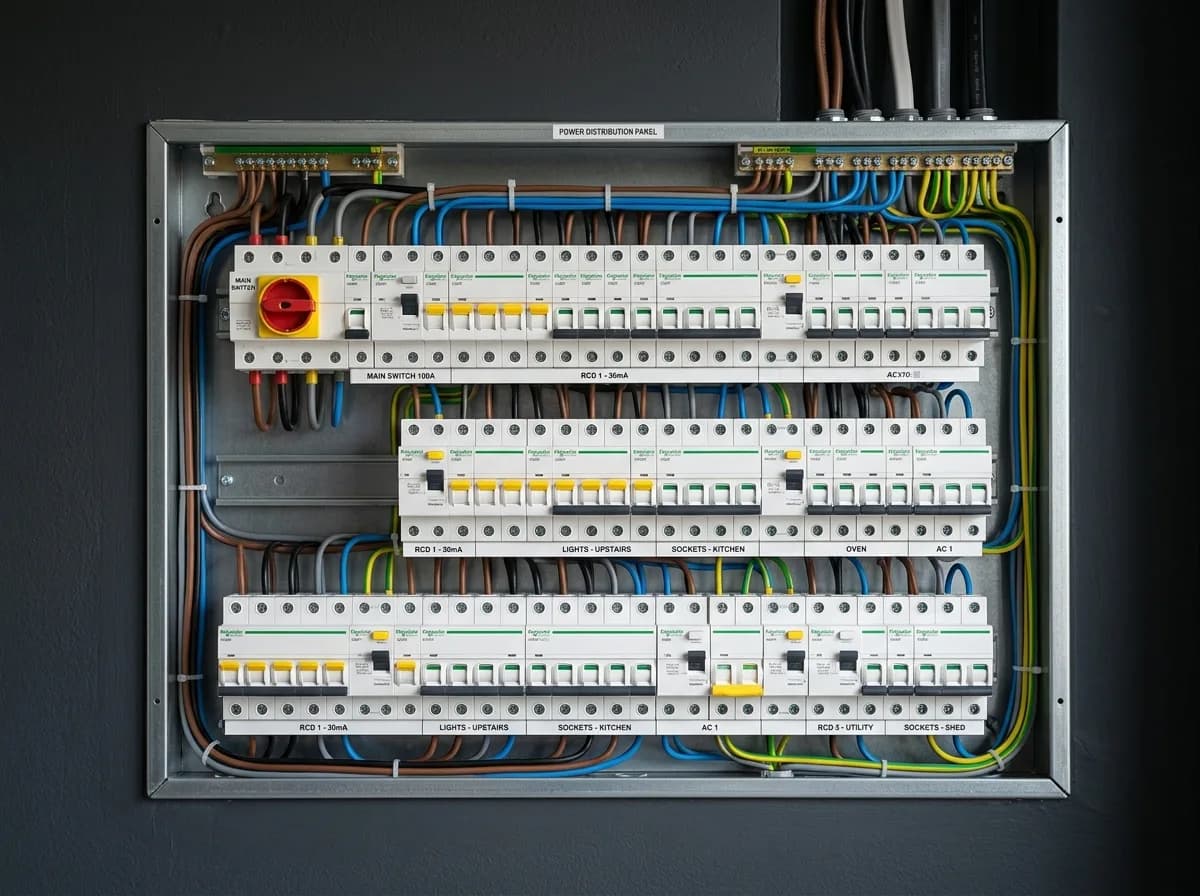
Your switchboard is the point where power is divided between lighting, power points, fixed appliances and other circuits. A circuit breaker is designed to disconnect a circuit when there is a fault or overload. A safety switch, also called an RCD, is a separate protective device that responds to electrical leakage. Modern boards often combine these functions in individual RCBOs, but the suitable arrangement depends on the installation.
- Fuses that need replacing after they operate
- Circuit breakers that trip repeatedly without an obvious one-off cause
- A board with no room for a new circuit
- Heat marks, cracking, corrosion or loose-looking fittings around the board
- Lights dimming or power cutting out when larger appliances start
- Planned additions such as an induction cooktop, air conditioner, EV charger, solar equipment or a renovation
Old Fuses Are A Reason To Have The Board Checked
Ceramic fuses and older fuse carriers are common in established Melbourne homes. Their presence does not tell you everything about the wiring behind them, but it is a good reason to have a licensed electrician inspect the switchboard before adding major new loads or altering circuits.
- Do not touch fuse carriers or attempt to replace them yourself
- Do not keep resetting a circuit that repeatedly fails
- Tell the electrician which fuse or breaker has been causing trouble and when it happens
Tripping Is Information, Not The Fault Itself
A breaker trip can be caused by too much load on one circuit, a faulty appliance, damaged wiring or another fault. Repeated tripping needs investigation. Replacing a breaker without finding the reason it operates can leave the underlying problem in place.
- Note what was running when the power went off
- Unplug portable appliances from the affected area if it is safe to do so
- Leave electrical fault-finding and repairs to a licensed electrician
More Electricity Use Can Expose An Older Board
Homes now commonly use more electrically powered equipment than when older switchboards were installed. A board upgrade may be considered when new equipment needs dedicated circuits, when the existing layout is crowded, or when the board’s protective devices are not suitable for the work being planned.
- Kitchen renovations
- Split-system heating and cooling
- Electric vehicle charging
- Home office circuits
- Workshop equipment
- Solar and battery-related electrical work
What Is The Difference Between A Circuit Breaker And A Safety Switch?
A circuit breaker and a safety switch do different jobs, and a sound upgrade considers both. A circuit breaker protects the circuit from excess current, while a safety switch is intended to disconnect power when it detects leakage that may indicate a shock risk.
The terms are often mixed up because both devices sit in the switchboard and may have a reset lever. If a safety switch trips, it does not automatically mean the safety switch is faulty. It may be reacting to a fault somewhere on the circuit, including an appliance.
From 2 July 2020, Energy Safe Victoria prohibited the supply of compact RCBOs that failed additional testing, which is one reason the electrician needs to use suitable equipment and verify it properly as part of the work.
- Circuit breaker: protects a circuit against overload and fault current
- Safety switch or RCD: responds to electrical leakage
- RCBO: a device that combines circuit-breaker and safety-switch functions
- Main switch: the isolating switch for the installation or a part of it
Why A Switchboard Needs The Right Protection Layout
A practical switchboard layout makes it easier to identify which circuit serves each part of the property. It can also reduce confusion when a fault occurs. The electrician will assess the existing circuits and discuss an arrangement appropriate to the work, rather than treating every board as the same.
- Clearly identify circuits where possible
- Allow for the circuits required by the planned work
- Keep equipment accessible for safe operation and testing
Why A Safety Switch Can Trip
A safety switch may operate because of a fault in fixed wiring, an appliance, moisture, damaged leads or a combination of small leakage issues. Avoid repeatedly forcing it back on. If it will not reset, or resets and trips again, arrange a licensed electrician to investigate.
- Unplug portable equipment only if it is safe and accessible
- Do not remove covers from the switchboard
- Keep people away from damaged leads, wet areas or anything showing signs of overheating
A New Breaker Does Not Fix Every Electrical Problem
A larger breaker is not a solution for a circuit that is overloaded or has unsuitable wiring. Protection must match the circuit it protects. This is why an electrician needs to assess the wiring, existing loads and condition of the installation before recommending changes.
- Fault finding may be needed before an upgrade scope is confirmed
- Appliance faults can look like switchboard faults
- Circuit additions can require work beyond the switchboard itself
When Should A Melbourne Homeowner Upgrade A Switchboard?
A Melbourne homeowner should arrange a switchboard assessment before a major electrical addition, after repeated faults, or when an older board has visible deterioration. It is also sensible to have the board reviewed when buying an older property or planning renovations that will change how power is used.
There is no useful one-size-fits-all answer based on the age of a home alone. A well-kept board can still be limited by its arrangement, while a newer-looking board can have issues with circuits, labels or capacity. Inspection gives you a clear starting point.
The 2009 Victorian Bushfires Royal Commission found that five of the 11 major fires on 7 February 2009 were caused by failed electricity assets. While this does not mean a household switchboard is the same as the electricity network, it is a reminder not to ignore signs of electrical damage or deterioration.
- Before installing new fixed appliances
- Before an EV charger is installed
- During kitchen, laundry or extension planning
- When changing from gas appliances to electric appliances
- When a property inspection identifies electrical concerns
- After water damage, storm damage or signs of overheating
Kitchen And Laundry Changes Need Planning
An induction cooktop, oven, dishwasher, heat-pump hot water system or new laundry equipment can alter the electrical load and circuit requirements in a home. Raise these plans early, before cabinets, tiles and finishes make access more difficult.
- Provide appliance specifications if available
- Mention any appliances being removed as well as added
- Ask whether new circuits or switchboard space will be needed
EV Chargers Often Need A Board Review
An EV charger is a substantial fixed electrical addition. Before installation, the electrician needs to consider the existing supply, switchboard capacity, circuit protection, cable route and other equipment already used in the home.
- Do not rely on a standard power point as a substitute for a proper assessment
- Tell the electrician about solar, batteries and major appliances
- Choose the charging location before installation work is scoped
Visible Damage Is Not Something To Watch And Wait On
Burning smells, buzzing, heat, discolouration, water entry or a damaged switchboard enclosure need prompt professional attention. Keep clear of the board and contact a licensed electrician. If there is immediate danger, smoke or fire, call emergency services.
- Do not touch a hot or wet switchboard
- Do not cover a damaged board or try to dry it with equipment
- Keep children and others away from the area
What Happens During A Circuit Breaker Upgrade?
A circuit breaker upgrade starts with an assessment of the existing switchboard, wiring condition, circuits and the work you want done. Camma Electrical then explains the findings in plain language and outlines the practical options before electrical work proceeds.
The exact scope varies. One property may need a small change to support a new circuit, while another may need a more complete switchboard replacement because the existing board, protection or layout is no longer suitable for the installation.
In Victoria, AS/NZS 3000:2018 is the primary standard for switchboard upgrades, so the work needs to be assessed as part of the whole installation rather than treated as a simple swap of old parts for new ones.
- Inspection of the existing switchboard and visible electrical components
- Discussion about tripping, appliances and planned alterations
- Identification of circuits and available board space
- Recommendation of suitable upgrade work
- Testing and checks after work is completed
- Explanation of the finished board and circuit labels
The Power May Need To Be Switched Off
Switchboard work commonly requires an interruption to power. The electrician will discuss this before the job so you can plan around refrigeration, computers, medical equipment, gates, alarms or other equipment that may be affected.
- Charge essential devices beforehand
- Save computer work and shut down equipment properly
- Tell us about any equipment that cannot be without power
The Scope Can Change If Hidden Issues Are Found
Older electrical installations can reveal problems once the board is opened and circuits are tested. Damaged insulation, unsuitable connections, inaccessible wiring or previous alterations can affect what is required. If that happens, the electrician should explain the issue and the available way forward.
- A clear photo of the board can help with an initial discussion
- Access around the switchboard helps the inspection
- Mention any previous electrical work or known faults
Testing Matters After The Upgrade
A switchboard is not finished just because new devices are fitted. The completed work needs appropriate testing and checking so the electrician can confirm the relevant circuits and protective devices are operating as intended.
- Ask the electrician to show you the circuit identification
- Keep any electrical paperwork with your property records
- Contact a licensed electrician if a new device trips repeatedly after the work
A Real Example: Adding An Induction Cooktop In An Older Melbourne Home
If you are replacing a gas cooktop with an induction unit in an older Melbourne home, the switchboard should be checked before the kitchen installation is locked in. The cooktop may need a dedicated circuit, and the existing board may not have suitable capacity or room for the required protection.
For example, a homeowner in a 1970s brick veneer house plans a kitchen renovation. The existing board has older fuses and every existing way is occupied. The electrician first inspects the switchboard and confirms the cooktop cannot simply be connected to an existing kitchen power circuit. A scope is then prepared to update the board arrangement and provide the circuit needed before the kitchen is closed up.
- The appliance choice is confirmed early
- The existing board and supply are assessed
- The required circuit route is planned before cabinetry is installed
- Switchboard work and circuit work are completed by a licensed electrician
- The new circuit and protection are tested and identified
Why The Appliance Should Be Chosen Early
Electrical requirements differ between appliances. Having the model details available lets the electrician consider the manufacturer’s installation information alongside the property’s existing electrical setup. This avoids guessing and helps coordinate the electrical work with the renovation schedule.
- Send through the make and model where possible
- Include planned oven, dishwasher and hot water changes
- Mention whether the kitchen will have new lighting or additional power points
Why One Existing Circuit May Not Be Enough
Kitchen power circuits already serve a range of appliances and outlets. Adding a major fixed appliance to a circuit that was not designed for it is not a safe shortcut. The electrician will determine the proper circuit arrangement for the installation.
- Avoid using extension leads for fixed appliance needs
- Do not ask a cabinet installer to make electrical connections
- Plan the switchboard work before the final fit-off stage
Why Access Affects The Job
The easiest time to run a new circuit is often before walls, cabinets and splashbacks are finished. Good planning does not remove the need for inspection, but it can make the work less disruptive and avoid reopening completed surfaces later.
- Coordinate with your builder or kitchen installer
- Keep the switchboard accessible on the scheduled day
- Ask about timing before walls are closed
Circuit Breaker Upgrades For Victorian Rental Properties
For Victorian rental properties, switchboard protection is not just a maintenance issue. From 29 March 2023, Victorian rental properties must have all power outlets and lighting circuits connected to a compliant circuit breaker and a compliant safety switch.
Consumer Affairs Victoria identifies a safety switch as an RCD. If you own or manage a rental property with an older fuse board or uncertain safety-switch coverage, arrange a licensed electrician to inspect the installation and advise on the work required.
For Victorian rental properties, Consumer Affairs Victoria says that from 29 March 2023 all power outlets and lighting circuits must connect to a compliant switchboard-type circuit breaker and residual current device. The actual protection on each circuit still needs to be checked rather than assumed from the appearance of the board.
- Check whether power and lighting circuits have the required protection
- Keep records of electrical safety work with the property documents
- Arrange access with the renter before planned electrical work
- Do not assume a single safety switch protects every circuit
Rental Electrical Safety Checks
Victorian rental providers who enter into a new agreement after 29 March 2021 must have electrical installations and fittings checked by a licensed electrician at least every two years. This also applies where a fixed-term agreement rolled into a periodic agreement after that date. These checks are separate from simply responding when a breaker trips or an appliance stops working.
- Book checks before they become overdue
- Provide clear access to the switchboard and electrical areas
- Raise known faults or recurring trips with the electrician
Keeping The Required Records
A rental provider must keep a record of the most recent electrical safety check until a new record is created. A rental provider must give the renter the date of the most recent electrical safety check within seven days of a written request.
Keep the record somewhere it can be found when needed. It should not be treated as a substitute for acting on a current electrical fault, damage or safety concern reported by a renter.
- Record the check date and retain the supporting documents
- Keep copies when property management arrangements change
- Respond to electrical concerns through a licensed electrician
Upgrades And Repairs Are Different Conversations
A safety check can identify items that need attention, while an upgrade may be needed because of the existing switchboard’s condition, required protection or planned electrical additions. A site inspection lets the electrician separate urgent faults from improvement work and explain the priorities clearly.
- Report burning smells, heat or recurring trips straight away
- Discuss planned appliance changes with the electrician
- Do not delay a fault investigation while waiting for other renovations
How To Prepare For A Switchboard Upgrade Quote
You can help make a circuit breaker upgrade assessment more useful by sharing clear information about the property, the board and what you want to add. A licensed electrician still needs to inspect the installation, but a few details upfront help focus the conversation on the right work.
Take a clear photo of the switchboard from a safe distance if it is easy to do so. Do not remove covers, move wiring or touch damaged components to get a better picture. Describe what is happening instead.
- Property type and approximate age if known
- Photos of the outside of the switchboard only
- Details of tripping or power-loss events
- List of planned fixed appliances
- Renovation plans or electrical drawings if available
- Known issues such as water damage or previous electrical repairs
Questions Worth Asking
A good quote discussion should give you a practical understanding of the work. Ask what is being changed, why it is needed, whether other issues were found, how long access to power may be affected and what you should expect once the work is complete.
- Which circuits are included in the work?
- Will new circuits be required for planned equipment?
- What needs to be done before the electrician arrives?
- Will the existing circuit labels be updated?
Why Photos Cannot Replace An Inspection
A photo may show the style and general condition of a board, but it cannot confirm the condition of wiring, connections, circuits or protective devices. An inspection is needed before a firm recommendation can be made.
- Photos are useful for initial context
- Visible damage should be described as well as photographed
- Keep a safe distance from any board showing damage or water entry
Avoid The Cheapest Shortcut
Switchboard work affects the safety of the whole installation. The right scope is the one based on the actual circuits and property needs, not a quick replacement of one visible component. Use a licensed electrician who can inspect, explain and complete the work properly.
- Do not carry out electrical work yourself
- Do not accept unexplained changes to breaker sizes
- Ask for clear details of the work being proposed
How To Book A Circuit Breaker Upgrade In Melbourne
Getting started is straightforward: get in touch with Camma Electrical and explain the switchboard issue or planned electrical addition. You will be booked with a licensed electrician who can inspect the property, discuss what you need and provide practical advice based on the condition of the installation.
Camma Electrical is run by a working electrician and holds electrical contractor licence REC 36165. You can expect a clear conversation about the work, sensible options where there is more than one path, and an explanation of what will happen on the day.
- Tell us if there are repeated trips, heat, smells or visible damage
- Mention renovation dates and planned appliances
- Let us know about access restrictions, tenants, pets or equipment affected by a power interruption
- Have any appliance details or switchboard photos ready if available
Before The Electrician Arrives
Make the switchboard area accessible where it is safe to do so, and keep vehicles, stored items and garden equipment clear of the approach. Let us know about any urgent warning signs before the visit. If there is smoke, fire or an immediate danger, call emergency services.
- Keep children and pets away from the switchboard area
- Do not remove the switchboard cover
- Write down the timing and pattern of any tripping
During The Assessment
The electrician will look at the existing board, ask about your power use and planned work, and explain any concerns found. If an upgrade is appropriate, you will understand what is proposed and why before work goes ahead.
- Ask questions in plain language
- Point out circuits that cause problems
- Mention all planned electrical additions, not just the first one
After The Work Is Done
Once the work is complete, the electrician will explain the finished switchboard and any important points about the circuits. Keep the relevant documents with your home or business records, and contact a licensed electrician if you notice a recurring issue later.
- Familiarise yourself with the circuit labels
- Keep the switchboard area clear for future access
- Test and maintenance questions should be directed to a licensed electrician
CLIENT REVIEWS
WHAT CLIENTS SAY
17 reviews on Google →
Common Questions
Can I replace an old fuse box with circuit breakers?
A licensed electrician can inspect an old fuse board and advise whether a circuit breaker or full switchboard upgrade is appropriate. The required work depends on the circuits, wiring, safety-switch protection, board condition and any new electrical loads planned.
Why does my circuit breaker keep tripping?
It may be reacting to overload, a faulty appliance, damaged wiring or another electrical fault. Do not keep resetting it. Note what was operating when it tripped and arrange a licensed electrician to investigate.
Does an EV charger require a switchboard upgrade?
Not always, but the switchboard and supply need assessment before installation. An electrician will consider the existing capacity, protection, available board space, cable route and other major appliances in the property.
Are safety switches required in Victorian rental properties?
Victorian rental properties must have all power outlets and lighting circuits connected to a compliant circuit breaker and compliant safety switch. A licensed electrician can inspect the installation and advise on any work needed.
How long does a circuit breaker upgrade take?
The time depends on the condition and size of the existing board, the number of circuits, access, whether new circuits are needed and whether hidden issues are found. An inspection is the best way to understand the likely scope.
Sources
- Consumer Affairs Victoria — From 29 March 2023, Victorian rental properties must have all power outlets and lighting circuits connected to a compliant circuit breaker and a compliant safety switch.
- Energy Safe Victoria — From 2 July 2020, Energy Safe Victoria prohibited the supply of compact RCBOs that failed additional testing.
- 2009 Victorian Bushfires Royal Commission — Five of the 11 major fires on 7 February 2009 were caused by failed electricity assets.
Need a circuit breaker upgrade or switchboard assessment in Melbourne? Get in touch with Camma Electrical to book a licensed electrician.
Get a free, no-obligation quote from your local licensed electrician.